
In this first blog, we delve into the principles of modifiable lifestyle factors. As a Functional Medicine Health Coach, I support clients in taking a common sense approach to these critical areas impacting their health so they can move forward, making informed decisions that move them toward their health goals and a longer health span. With knowledge, resources and a structured support system, they start to take aligned action to reach their desired health outcomes. Here, we go back to the basics to look at the latest guidelines for health and well-being and evidence-based practices in each of the six areas of lifestyle that can unlock a newfound vitality beyond quick fixes and surface-level remedies.
Fatigue has become an all-too-familiar companion for many. It drains us, affecting our physical, mental, and emotional well-being. Fatigue is often attributed to the inevitable consequence of modern life or a secondary symptom of another illness. However, the field of Functional Medicine offers a compelling perspective that recognizes the potential for change, healing, and revitalization by addressing the root causes.
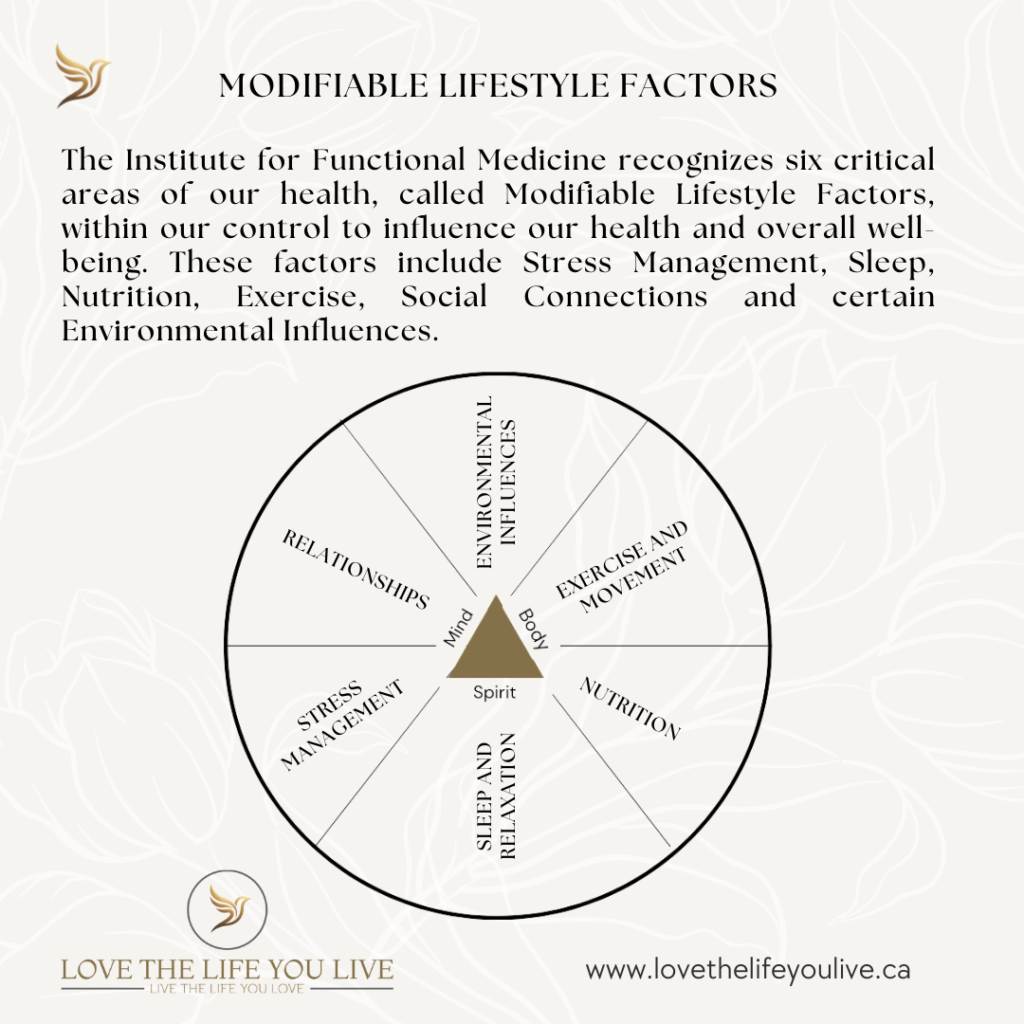
The above diagram illustrates, our holistic health and potential for subjective well-being. At the center our lifestyle habits are the body, mind, and emotions. A holistic health approach is rooted in the belief that the body’s physical health, mental clarity, emotional well-being, and spiritual fulfillment are intricately linked, and each aspect influences the others. It emphasizes the importance of achieving a personalized and harmonious balance within these aspects of one’s being to attain optimal health and vitality.
“Epigenetics is the study of how your environment and behaviours can cause changes that affect how your genes work.”[1]
Functional Medicine recognizes six Modifiable Lifestyle Factors that can significantly impact our health and well-being. These factors include Nutrition, Exercise, Stress Management, Sleep, Social Connections and certain Environmental Influences.
Unlike genetic changes, epigenetic changes are reversible and do not change your DNA sequence. Still, they can change how your body reads a DNA sequence.”
Fatigue, estimated to affect anywhere from 15 to 40% of the global population, [4] can be a critical early indicator, signalling the onset and progression of various chronic illnesses by reflecting underlying imbalances and dysfunctions in the body’s systems. According to the CDC, chronic disease causes 7 out of 10 deaths every year. The CDC recognizes five lifestyle risk factors as critical for disease prevention: insufficient sleep, sedentary lifestyle, excessive alcohol use, smoking, and nutrition (leading to overweight and obesity).
Taking a step back to examine our overall lifestyle regularly is essential because it gives us a holistic perspective on the interconnected factors influencing our health and what is no longer serving us. By identifying the habits, stressors, and patterns in our lives, we can make informed choices and implement sustainable changes that positively impact the root cause of our health issues.
“Strength training (also referred to as resistance training) enables adults to improve their overall health and fitness by increasing muscular strength, endurance, bone density, insulin sensitivity, and glucose metabolism,” according to the American College of Sports Medicine. Strength training and a diet high in protein and complex carbohydrates can improve your overall metabolism and allow you to maintain a healthy weight. Muscle tissue burns more calories than fat tissue, even at rest, boosting your metabolic rate throughout the day and enhancing daily energy expenditure.
The following physical activity guidelines published by the American College of Sports Medicine are widely recognized by health authorities across the US, Canada and the world, as well as the World Health Organization and the CDC [2]:
Tips: Make it fun!
I have observed many clients falling into thinking traps that they need too much sleep when, in reality, 8 to 9+ hours of sleep is the norm for adequate rest and rejuvenation.
According to National Sleep Foundation guidelines, adults 18 -64 need 7 – 9 hours or more per night.
Sleep issues run deep! Beyond the fundamentals of consulting with a medical practitioner and practicing good sleep hygiene, resolving sleep issues often involves chipping away at other modifiable lifestyle factors first by making slow and sustainable changes. Practicing mindfulness is an essential tool and long-term strategy for navigating challenges and improving decision-making. As demonstrated in the modifiable lifestyle factors diagram, our physical, emotional and mental well-being are at the core of our lifestyle. Ultimately, our ability to challenge the status quo in our health will involve mindfulness and self-reflection on our beliefs, behaviour patterns and mental/ emotional patterns to make the more complex changes we seek.
“Stress is what we feel when something we care about is at stake.”
Kelly McGonigal
Stress isn’t all bad. Stress can be a positive force for good when we feel like we are rising to meet our goals, experiencing growth, and transforming ourselves through it. Whether the sources of stress are positive or negative, equipping ourselves with practical skills and tools for managing it is essential to changing the behaviours we want that align with our values and the person we want to be. Use your self-awareness to:
Research shows that supportive relationships improve our mental and physical health. The impact of social isolation and loneliness on our health and well-being is a significant issue worldwide and happens throughout various periods of our lives. However, it is also an opportunity to re-evaluate what we want in our relationships and make new mutually supportive connections that align with our deepest-held values.
Ways to promote supportive relationships:
The field of nutrigenomics explores how food interacts with our genes and impacts our health. The quality of food and the nutrients we consume directly provide fuel, energy and information for every cell, tissue and organ.
In epigenetics, physical environmental factors that impact health include sunlight (UV), air quality, pathogens like viruses and bacteria, mould, chemical exposures, pollutants, toxins in food or personal care products, and drugs. See the link below to the Environmental Working Group website for consumer guides on various topics to keep you and your family safe. Also, check out smartphone apps, like YUKA, ThinkDirty, EWG Healthy Living or Detox Me, that allow you to scan food or personal care products and provide clear information about the health impacts of the products you use. Other tips include:
References:
[2] American College of Sports Medicine
[3] Harvard Healthy Eating Plate
Heather Budd is the founder of MyTimeline Health, a National Board Certified Health and Wellness Coach (NBC-HWC), and a Functional Medicine Certified Health Coach (FMCHC). Her work is grounded in the Stages of Change framework from Dr. Prochaska’s “Changing to Thrive,” and draws on her own experience navigating chronic illness, burnout, and rebuilding her health from the ground up.
MyTimeline Health programs are self-directed lifestyle behavior change programs and coaching. They are not therapy, psychotherapy, or clinical treatment, and do not constitute medical or psychological advice. Coaching can complement professional care but does not replace it. If you recognize signs of depression, anxiety, burnout, or other mental health concerns in yourself, please reach out to a qualified healthcare professional.
.